

We Must Move Forward
On the SSPX Profession of Faith

It seems likely that the leaders of the traditionalist Society of St. Pius X (SSPX) will follow through with the consecration of four new bishops on July 1 without the approval of Pope Leo XIV, an act of schism. At a recent meeting with journalists, Pope Leo suggested that he is “considering making another appeal” to the SSPX to stand down, but he insisted, “If they make that choice [to perform the consecration], I am sorry, but we must move forward.” Leo’s remark perhaps suggests that the Vatican is finally shifting away from the conciliatory stance represented by Pope John Paul II and Benedict XVI’s repeated efforts at rapprochement, even after the prior illicit consecration of four bishops by the SSPX’s founder Archbishop Marcel Lefebvre in 1988.
Just over a week later, the Superior General of the SSPX, Fr. David Pagliarani, and four other leaders of the group published an open letter to Pope Leo and the cardinals gathering for this weekend’s consistory together with what they call a “profession of faith.” The letter confirms that the SSPX intends to carry out the consecrations as planned, but its primary purpose is to “implore that [Catholic] Tradition and the purity of Faith be once again placed at the foundation of the life of the Church.” The profession of faith, then, is intended as a systematic articulation of the Tradition, and, interestingly, they add, “We hope that one day this doctrinal text may serve as a basis for an honest discussion with the Holy See, in a spirit of peace, brotherhood, and charity.” Although the open letter and profession of faith must have been in the works long prior to Pope Leo’s remarks, they nevertheless serve as the SSPX’s rejoinder to the pope.
The profession of faith—which is divided into seventeen articles, each comprised of several paragraphs—attempts to offer a comprehensive account of the Catholic faith, but it also condemns several teachings of the Second Vatican Council that have been reiterated in the teachings of subsequent popes, including: Dignitatis Humanae’s defense of religious freedom (#103), Unitatis Redintegratio’s teaching that the Holy Spirit works through non-Catholic Christian churches and communities (#61), and Nostra Aetate’s recognition that non-Christian religions reflect a ray of God’ truth (#62). It also openly rejects the liturgical reforms of the council (#125). Finally, it likewise condemns certain teachings of Popes Francis and Leo on, for example, synodality and human fraternity, although misconstruing those teachings.
The rejection of these teachings of Vatican II and the liturgical reforms implemented in response to the council were always at the heart of the SSPX’s conflict with the Vatican. As I noted back in February, however, the Vatican has tended to approach the matter as a question of submission to the Magisterium’s authority. For example, the “Protocol” offered by Pope John Paul II to Archbishop Lefebvre in 1988 required Lefebvre and the SSPX to assent to the Church’s doctrine “on the ecclesiastical magisterium and the adherence owed it” expressed in Vatican II’s Lumen Gentium, but did not require them to affirm the controverted teachings of the council. Rather, it expected them to agree that:
Regarding certain points taught by the Second Vatican Council or concerning subsequent reforms of the liturgy and law which appear difficult to reconcile with tradition, we commit ourselves to a positive attitude of study and of communication with the Apostolic See, avoiding all polemics.
As the Congregation (now Dicastery) for the Doctrine of the Faith later elaborated in the document Donum Veritatis, the “religious submission of mind and will” that Catholics must give to so-called non-definitive teachings of the Magisterium leaves room for questioning, even if there is a presumption of submission to the Magisterium’s authority and a responsibility to continue to study the issue in question. Applied to the SSPX, then, the Vatican proposed that the Society’s members need not affirm the teachings of the council they found “difficult to reconcile with tradition,” but rather accept that they were authentic expressions of the Church’s Magisterium and commit to further dialogue and study on those teachings.
The SSPX’s new profession of faith is definitive evidence the SSPX continues to reject even this limited rapprochement. As Msgr. Arthur Holquin, S.T.L. writes:
With a candor it can no longer disguise, [the profession of faith] repudiates some of the weightiest doctrinal developments an ecumenical council of the Church has handed down — on religious liberty, on ecumenism, on the non-Christian religions, on the very authority of the living Magisterium — and obstinately refuses to receive them. The cat is well and truly out of the bag.
Holquin adds that the open letter and profession of faith reveal that the SSPX’s rupture with the Vatican was never primarily about the liturgy, but rather the reception of the council as a whole. But they also make clear that the SSPX has embraced an impossible stance, at the same time insisting 1) on their loyalty to “the immutable Tradition, the echo in history of eternal Truth” (as the open letter puts it) as taught over the centuries by the Church’s Magisterium, and 2) that an ecumenical council and several popes have taught erroneous doctrine, and that they (the SSPX) have the right to correct the Magisterium on matters of doctrine.
In a 1976 letter to Archbishop Lefebvre, Pope Paul VI wrote: “In practice you are claiming that you alone are the judge of what tradition embraces.” The fact that the SSPX has now issued its own “profession of faith”—addressed to the pope and cardinals, no less—demonstrates, I think, that Pope Paul astutely identified something central to the spirit of the Society. Rather than committing to continued study and dialogue on the teachings of the Magisterium, the SSPX expects the Vatican to engage in dialogue with them on the contents of their ersatz profession of faith.
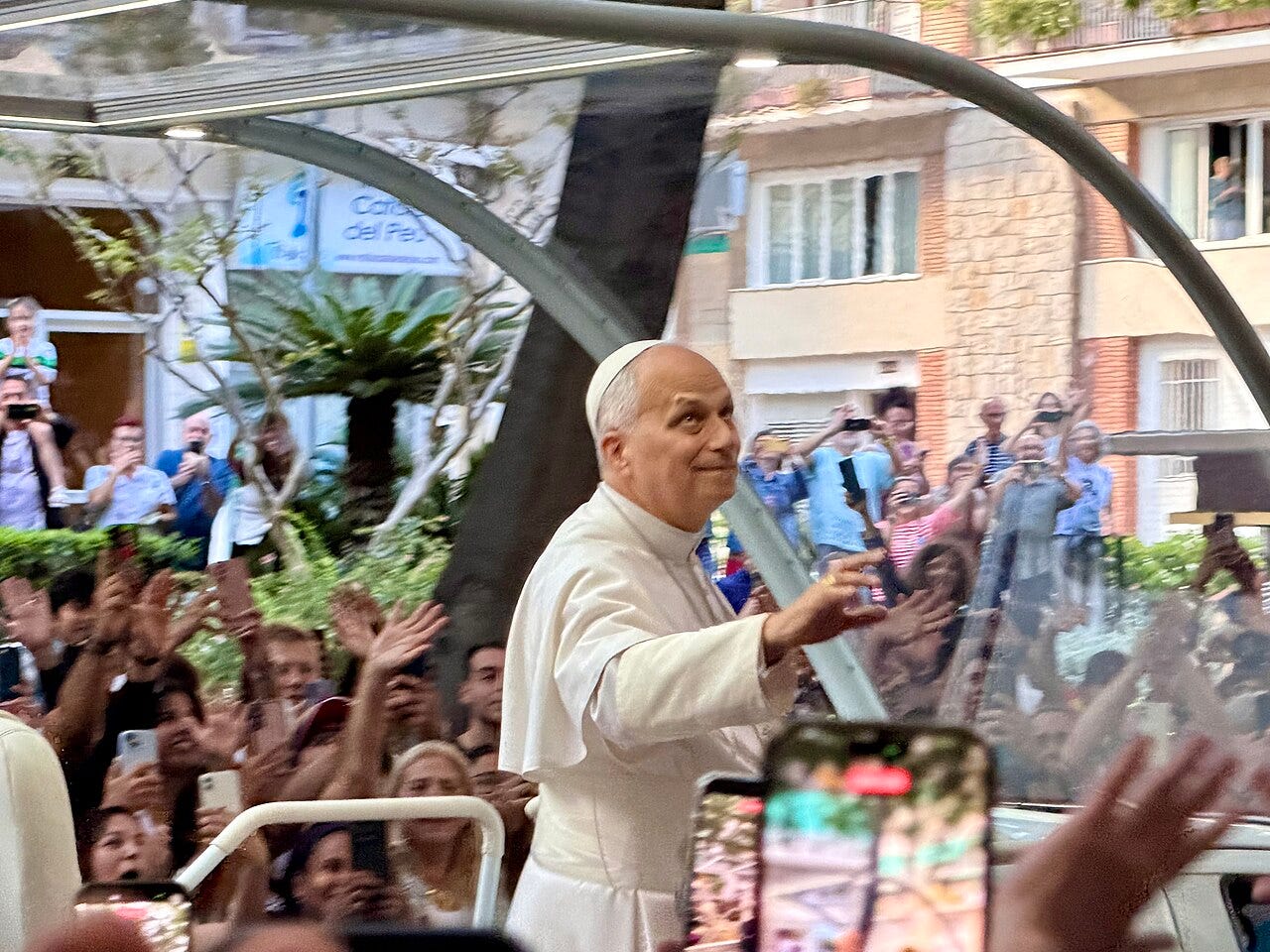

I think it is a happy coincidence that the SSPX’s now explicit rejection of certain teachings of Vatican II comes at the same time that Pope Leo XIV has been offering a series of general audiences explaining and reaffirming the key teachings of the council. Sarah Carter has been providing excellent summaries of these audiences at her Substack Pope Leo Weekly, and Sarah and Paul Fahey have also been discussing them at live online events in the “Leo Live!” series, which can be found among other episodes of Paul’s Third Space podcast. I am hopeful that these catecheses are a sign that Pope Leo is more interested in offering a full-throated defense of the council than in bending over backwards to placate those who call it into question: “I am sorry, but we must move forward.” I also suspect that the attention Pope Leo gave to the issue of the development of doctrine in his recent encyclical Maginifica Humanitas, despite its ostensible focus on AI, is an indication that he hopes to offer some further clarity on how the Church views that issue, perhaps in a later document.
Before closing, I want to say something about the actual contents of the SSPX’s profession of faith. The majority of the text simply represents Catholic doctrine as one might find in the Catechism. Each of the seventeen articles, however, also identifies “errors” expressed in recent magisterial teaching or that can at least be found in the Church. Certainly, some of the errors identified in the document are worthy of condemnation; for example, it rightly states, “Faith is . . . neither a blind religious sentiment, nor an emotion of the soul, nor an intimate conviction produced by personal or collective consciousness.”
In other cases, however, the document uses a number of rhetorical devices to make recent magisterial teaching appear erroneous, such as:
Condemning an extreme proposition while ignoring that a more moderate version of the proposition could be true; for example, it states that, “It does not suffice to say with the Jews and Muslims that God is one” (#22), but even if it doesn’t suffice, that God is one can certainly be affirmed by Christians, Jews, and Muslims together.
Similarly, contrasting two propositions in a black and white manner, as if one were totally true and the other totally false, when in fact elements of the false proposition could be compatible with the true proposition; for example, it states: “Man is therefore not the necessary product of a blind evolution, nor the simple result of material forces; he comes from God as from his creative cause, depends upon God, Who maintains him in being, and is ordered to God as to his end” (#23), but of course there are ways of understanding evolution that are not materialistic and that are compatible with the second proposition.
Misrepresenting certain Church teachings to create the appearance of error when none exists, such as the following on synodality: “I . . . reject the synodalist conceptions which tend to transform the hierarchical Church into a consultative, parliamentary, or democratic structure, subject to the fluctuating opinions of the Christian people or to the pressures of the world” (#79).
Citing earlier magisterial documents in support of a claim that goes beyond what the texts of those documents teach; for example, in support of the claim that, while those formally outside the Church can be saved through “a supernatural ordination to the one Church of salvation” expressed in an unconscious longing, God does not use other religions as a means of communicating grace, the document cites both Pius XII’s encyclical Mystici Corporis Christi and his letter condemning the views of Fr. Leonard Feeney, but while both affirm the first claim, neither discusses, let alone condemns, the second.
I could cite other examples, but I’ll leave it here. Of course, these are the sorts of issues that could have been clarified through genuine dialogue about the Church’s teachings, but alas.
Of Interest…
Writing at Commonweal, Massimo Faggioli has an important article on what Pope Leo’s speech to members of the Spanish parliament, and other comments from his recent visit to Spain, might tell us about his approach to European politics. Faggioli suggests that Leo is less concerned with appealing to Europe’s “Christian roots”—and therefore a past in need of restoration—than his predecessors John Paul II and especially Benedict XVI. In part, this is because far right political parties like Spain’s Vox have used similar rhetoric to support stances on immigration and other issues that the Church opposes. In a speech at the Royal Palace in Madrid, Leo insisted that Europeans should flee “from identity-based approaches that seem to explain everything yet only fill the world with ‘ghosts’ and enemies.” I might add, too, that the appeal to Christian roots is hard to reconcile with Leo’s warning in Magnifica Humanitas that “truth is not a territory to be defended,” and that the Church should not be interested in “occupying positions of power or defending cultural strongholds” (#25). Pope Leo’s approach to Europe, then, is linked to his broader political theology, which I outlined here.
A couple of weeks ago, the editors at Catholic Moral Theology re-published a blog post of mine from 2015 on what Pope Francis had to say about evolution and its relationship to theological anthropology in Laudato Si’. I have to admit, this is one of my favorite blog posts I’ve written over the years, so I’m glad for it to get some new attention!
A Patristic Response in Support and Affirmation: Reading *Laudato Si’* with Irenaeus
The essay is persuasive in arguing that *Laudato Si’* marks a significant development in modern Catholic teaching by bringing evolutionary biology into closer contact with theological anthropology.
If earlier papal teaching accepted evolution largely as a scientific account compatible with belief in creation, Pope Francis goes further by situating the human person within an evolving cosmos while still insisting on the irreducible dignity and uniqueness of the human being. That move is indeed important. Read through the lens of **Irenaeus of Lyons**, it appears not as a rupture with the Christian tradition but as a deepening of one of its oldest insights: that humanity is created in goodness, formed within a process, and called toward fullness of life in communion with God.
Irenaeus is an especially fitting Father for this discussion because his theology is marked by a strong sense of **development**, **embodiment**, and **divine pedagogy**. He does not imagine the human person as a finished static essence dropped into the world fully complete. Rather, humanity is created immature, good but not yet perfected, and destined to grow into the likeness of God. This developmental logic gives us a powerful way to affirm what is strongest in Francis’s anthropology. If Francis speaks of the human being as emerging within a material universe, Irenaeus helps us see that such emergence need not threaten dignity. On the contrary, creaturely development can itself be the mode by which divine wisdom leads creation toward its intended end.
This is the first major strength of the essay’s reading of *Laudato Si’*: it rightly notices that Francis does not place the human being outside nature. He says clearly that “we are part of nature, included in it,” and he speaks of biological evolution and emergent complexity in a way that implies continuity between humanity and the rest of the living world.
This is not alien to Irenaeus. For him, the human being is formed from the earth and belongs within the order of creation.
Matter is not a prison; flesh is not an embarrassment; the world is not a mere backdrop for the soul. The Creator’s work is good, and the human vocation unfolds within that goodness. In an Irenaean frame, then, Francis’s integration of humanity into the natural world is not a concession to modern science at the expense of doctrine. It is a recovery of the Christian affirmation that God’s creative purpose is worked out in and through the material order.
At the same time, the essay is also right to stress that Francis refuses reductionism. Human beings emerge within the cosmos, but they are not exhausted by the categories of physics and biology. Francis insists on personal identity, rationality, relation, and openness to God. Here again Irenaeus provides support. He does not define the human by intellect alone, nor by bare biological life, but by vocation: the human being is the creature called to receive God, to grow into divine friendship, and to live toward beatitude. His famous line, “the glory of God is a living human being; and the life of the human being is the vision of God,” captures precisely the sort of balance Francis is trying to maintain.
Human life in its embodied vitality is already glorious; yet its true life is found in relation to God. Biology is affirmed, but transcendence is not denied. Creaturely existence is real, but it is fulfilled only in communion.
This Irenaean perspective also helps clarify a tension the essay identifies in paragraph 81 of *Laudato Si’*. Francis says that the novelty of the human person “presupposes a direct action of God,” and the essay wonders whether this language risks introducing God as an occasional external cause inserted into an otherwise self-enclosed natural process.
That concern is understandable.
Yet Irenaeus suggests a more generous reading. For him, God is never a rival to created processes. Divine action is not one cause among others inside the system; it is the deeper source, measure, and destiny of the entire economy of creation.
To say that the human being depends upon God’s direct action need not mean that nature is insufficient until supplemented from outside. It can mean that the whole creaturely process is already held within a divine purpose that brings forth beings capable of knowing and loving God. Grace, in that sense, is not an interruption of created reality but its deepest truth.
This is why Irenaeus is especially valuable as a theological ally for Francis. He allows us to move beyond the sterile alternative between reductive materialism and crude supernatural interventionism. Human beings can be continuous with the animal world and yet bear a distinct vocation.
Consciousness, reflection, symbolic culture, and moral freedom can have real natural histories without becoming mere illusions or epiphenomena.
What matters is that the human person is not understood only by looking downward to material antecedents, but also upward and forward toward divine destiny. Irenaeus consistently interprets humanity teleologically: the meaning of the human creature lies in what it is called to become.
That teleological dimension fits well with Francis’s broader ecology. *Laudato Si’* is not merely describing natural mechanisms. It is trying to recover a world of relation, order, participation, and finality against a technocratic imagination that sees reality as raw material for manipulation.
Irenaeus would have recognized this concern.
He opposed Gnostic and dualistic distortions not simply by defending doctrine in the abstract, but by insisting that creation has coherence because it comes from one wise and loving God.
The world is not chaos, accident, or prison. It is an ordered work moving toward fulfillment. In that sense, Francis’s appeal to interconnection, open systems, and emergent wholeness can be read as a contemporary idiom for a deeply patristic intuition: creation is meaningful because it is upheld by divine wisdom and directed toward communion.
An Irenaean response would therefore largely support and affirm the essay’s main thesis. Yes, Francis has opened a more fruitful dialogue between evolution and Catholic anthropology than his recent predecessors did in their formal teaching. Yes, he has planted important seeds for future theological work. Yes, his anthropology is stronger when read in continuity with a tradition that understands the human being dynamically rather than statically. But Irenaeus also helps sharpen the constructive proposal: the real issue is not whether evolution leaves room for dignity, but whether anthropology is interpreted within a doctrine of creation and vocation spacious enough to include both biological becoming and divine destiny.
In that light, *Laudato Si’* should be received not as a final synthesis but as an opening. It suggests that the human person can be understood as fully creaturely, historically emergent, ecologically embedded, and yet uniquely called into conscious communion with God. That is not a betrayal of Christian anthropology. Read with Irenaeus, it is one of its most ancient possibilities.
#66 in the section rejecting ecumenism was interesting, mainly because the charge it makes against the present Catholic Church is essentially the traditional argument offered by Protestants (and especially hyper-Protestants like Primitive Baptists and Jehovah's Witnesses) against Catholicism; that it has engaged in "the indiscriminate adoption of the religious, moral, or symbolic categories of pagan cultures and their practices" through Marian veneration, prayers to the saints, the liturgical calendar, holy sites and relics, and even the underlying metaphysics of classical theism. Basically, it's an interesting glass house to throw rocks from.